Calendly Revenue: The $270M Number a $200K Personal Bet Turned Into (2026)
Calendly's revenue estimates range from $70M to $349M for the same year. A source-typed ledger reconciles the conflict and traces the real $270M-plus ARR back to founder Tope Awotona's $200,000 personal bet. (2026)
In this story

Quick answer
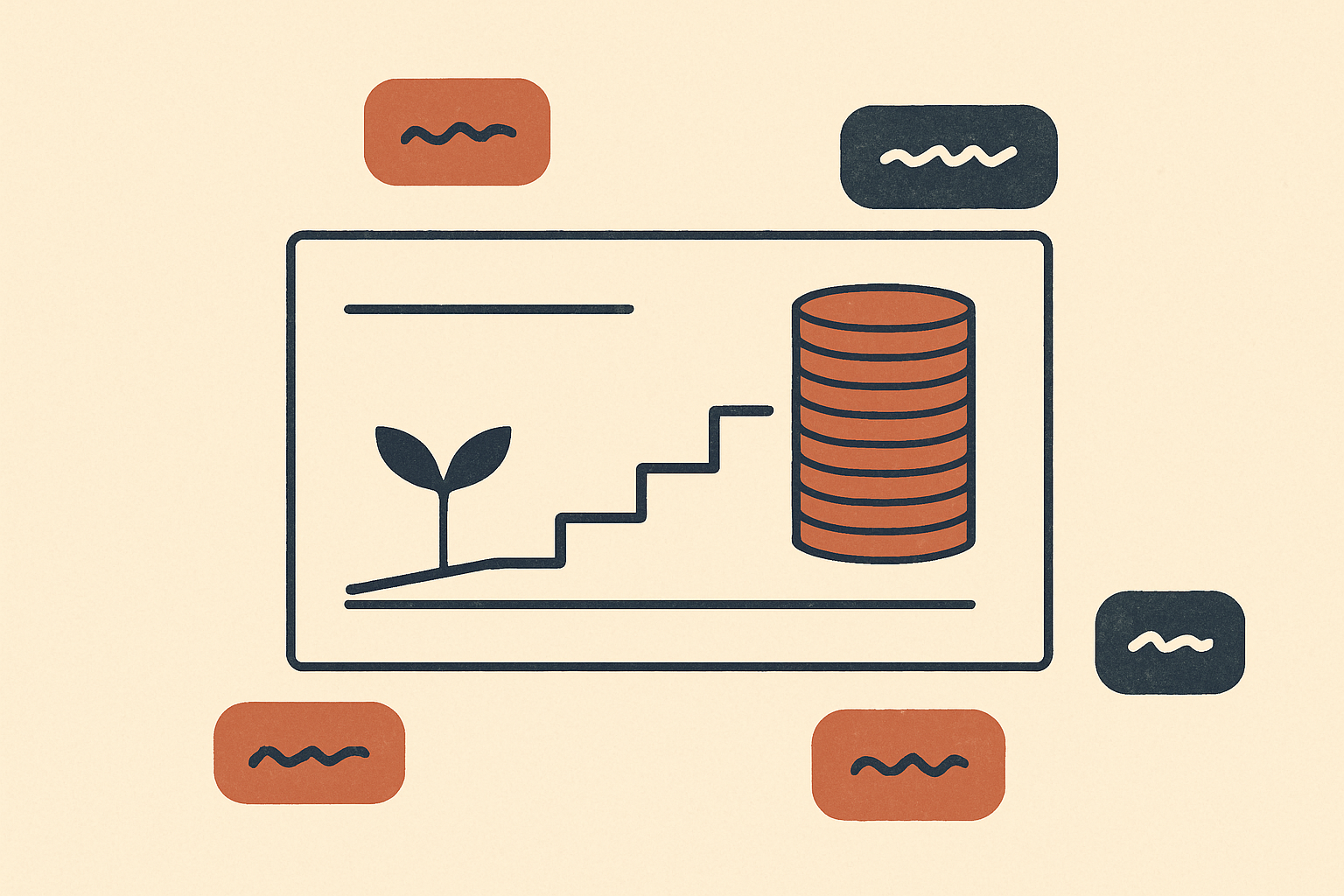
For 2023, the credible estimates cluster around $270 million to $276 million in annual recurring revenue (Sacra, and independent revenue reconstructions), up from roughly $185 million at the end of 2022. Older or mislabeled snapshots still floating around the results page (GetLatka's "$70 million, down from $181.5 million") are almost certainly stale. The revenue ladder that most sources agree on runs $1 million (2015), $70 million (2020), $100 million (2021), and about $144 million (2022) before the $270 million-plus mark in 2023. All of it grew out of one founder's personal bet: Tope Awotona put roughly $200,000 of his own savings, his 401(k), and a loan into Calendly in 2013 and did not take meaningful outside money until a single $350 million round in January 2021, at a $3 billion valuation, by which point the company was already profitable. Figures are third-party estimates, year-tagged and attributed below; Calendly does not publish financials.
Why the numbers disagree so wildly
Calendly is private, profitable, and under no obligation to disclose anything. That combination is catnip for revenue-estimate sites, and each one measures a slightly different thing at a slightly different moment, then leaves the page up for years.
The single largest source of confusion in the live results is the gap between two respected trackers. Sacra estimates Calendly hit $270 million in ARR at the end of 2023, up about 46 percent from $185 million at the end of 2022. GetLatka, meanwhile, still headlines "$70 million ARR in 2023, down from $181.5 million in 2022." Those cannot both describe the same company in the same year.
Read them as source types rather than facts and the contradiction dissolves. GetLatka's "$181.5 million" is within rounding distance of Sacra's $185 million 2022 figure, so the two agree on 2022. The "$70 million in 2023" is not a 2023 number at all. It matches Calendly's 2020 revenue almost exactly, which is the last figure that dataset appears to have refreshed before the label drifted. When a tracker shows a company shrinking by more than half in a year with no layoffs, no scandal, and a fresh $3 billion valuation, the number is stale, not the business.
A source-typed ledger
Here is the same question answered by each source, with the year each figure actually applies to. Read down a column, not across a row.
Scroll to see more
| Year | Revenue or ARR | Figure | Source |
|---|---|---|---|
| 2015 | Revenue (first profitable year) | ~$1M | Contrary Research |
| 2017 | Revenue | ~$9M to $10M | Google AI Overview cluster |
| 2020 (Nov) | ARR | ~$60M | Sacra |
| 2020 (year end) | Revenue / ARR | ~$70M | Sacra, Contrary Research |
| 2021 (early) | ARR | ~$85M | Sacra |
| 2021 | Revenue | ~$100M | Contrary Research |
| 2022 (year end) | ARR | ~$185M | Sacra |
| 2022 | Revenue | ~$144M | Growjo, independent reconstructions |
| 2023 (year end) | ARR | ~$270M (+46% YoY) | Sacra |
| 2023 | Revenue | ~$276M | Contrary Research |
| Latest est. | Revenue | ~$349M | Google AI Overview |
Two ladders run in parallel here, and confusing them is the second-biggest reason the estimates look chaotic. ARR is the annualized run-rate of subscriptions at a point in time. Revenue is what actually landed over twelve months. ARR leads reported revenue, so Sacra's $270 million ARR at the end of 2023 and Contrary's $276 million revenue for 2023 are not a contradiction. They are the same growth story measured with two different rulers, and they nearly touch.
The number behind the number: a $200,000 personal bet
Strip away the estimate noise and the durable fact is the origin, not the total. Calendly was not a funded rocket. It was a solo founder betting his own solvency.
Tope Awotona founded Calendly in February 2013 in Atlanta after a string of failed ventures. To build it, he liquidated his 401(k), pulled roughly $200,000 out of personal savings, and took on debt, then partnered with the development shop Railsware to ship the product. He has spoken publicly about pitching investors who passed, some for reasons that had nothing to do with the product. The company launched in 2013 and did not raise a proper seed round, a modest $550,000 from Atlanta Ventures, until April 2014, months after it was already live.
Then the part that gets lost under the $3 billion headline: Calendly was profitable by 2015, at around $1 million in revenue, and stayed that way. Per Contrary Research, it grew organically for years on that footing. By the time it raised its first and only large round, a $350 million Series B led by OpenView and ICONIQ in January 2021, it was doing roughly $85 million in ARR and did not need the money to survive. Sacra pegs the pre-Series-B capital efficiency at an ARR-to-funding multiple north of 100x. The $350 million was fuel poured on a fire that was already burning, and a chunk of it was liquidity for early stakeholders, not runway.
What actually transfers to an operator
The temptation with a story like this is to copy the outcome. That is the wrong lesson, because the part that produced the $3 billion valuation is the least repeatable.
The engine was distribution built into the product. Every Calendly link a user sends is a small advertisement to the recipient, who books a meeting, sees the branding, and often signs up to send their own. SaaStr has noted Calendly runs roughly a 90/10 split between self-serve and sales-led revenue, with a viral free tier doing the work that most companies pay a marketing department to do. That loop is a product of a specific category, scheduling, where the product's core action is inherently social. You cannot bolt it onto software whose core action happens in private.
What does transfer is the sequencing. Calendly reached profitability before it took a dime of meaningful outside capital, and it took that capital from a position of strength rather than desperation. The founder's $200,000 bought him the one thing funding cannot: the option to say no, and then to say yes on his own terms. For anyone reading OperatorBook's MRR diaries, that is the quietly radical move. Default alive first. Build a distribution loop the product creates for free. Treat an outside check as an accelerant you choose, not a lifeline you need.
That framing is also why the sibling stories on this desk rhyme. Basecamp refused institutional money almost entirely and optimized for profit per employee. Zoho built a multibillion-dollar business with no VC and no exit clock. Calendly is the third pattern: bootstrap to leverage, then take exactly one check, on offense. Three different answers to the same question, and none of them started with a raise.
The honest caveats
Every figure above is a third-party estimate. Calendly has never published audited financials, and it is under no obligation to. The 2023 revenue could plausibly sit anywhere from the high $200 millions to the $349 million the AI summary quotes, depending on whether you count ARR, recognized revenue, or a forward run-rate. What is not in dispute is the shape: a decade of compounding from $1 million to the mid-hundreds of millions, profitable most of the way, on a founder's personal stake and a single institutional round. When the estimates finally converge, that is the story they will be estimating.
Written by
Joaquin del RioJoaquin del Rio covers the money behind the milestones for OperatorBook, digging into what bootstrapped and indie founders actually earn and what it took to get there.
Frequently asked questions
How much revenue does Calendly make (2026)?
The most credible third-party estimates put Calendly at roughly $270 million to $276 million in annual recurring revenue for 2023, the most recent year with multiple corroborating estimates, with forward estimates reaching about $349 million. Calendly is private and does not publish audited financials, so every figure is an estimate.
Is Calendly profitable?
Yes. Independent research (Contrary Research) indicates Calendly became profitable in 2015 at around $1 million in revenue and has largely stayed profitable since. That is why its single large funding round in 2021 was optional rather than a survival raise.
How much money did Calendly raise?
A $550,000 seed round from Atlanta Ventures in April 2014, and a single $350 million Series B led by OpenView and ICONIQ in January 2021 at a $3 billion valuation. Total outside funding is roughly $350.6 million, nearly all of it in that one late round.
Why do Calendly revenue estimates vary so much?
Because Calendly is private, every figure is a third-party estimate, and sources measure different things (ARR versus recognized revenue) at different moments, then leave stale pages up. GetLatka's '$70 million in 2023' figure, for example, matches Calendly's 2020 revenue and appears mislabeled.
Who founded Calendly and how did he fund it?
Tope Awotona founded Calendly in Atlanta in February 2013. He funded it himself, liquidating his 401(k), spending roughly $200,000 of personal savings, and taking on debt, after several investors passed on the idea.
What is Calendly's valuation?
$3 billion, set in its January 2021 Series B. As a profitable private company under no pressure to raise again, Calendly has not publicly reset that valuation since.
More stories

Basecamp Revenue: The $280M Number 37signals Built on a Single Outside Check (2026)
37signals, the private company behind Basecamp, never publishes its revenue, so estimates scatter from $25M to $280M. A source-typed ledger, plus the one 2006 Bezos check that complicates the 'never took a dime' legend.

Zoho Revenue: The $1.4 Billion Number It Built Without a Dollar of VC (2026)
Zoho crossed about Rs 12,313 crore (roughly $1.4 billion) in FY25 revenue, up 17.8%, having never raised a cent of venture capital. A source-typed ledger of how, and what actually transfers.
The month my gross margin scared me at $38K MRR: a founder diary (2026)
At $38K MRR my revenue looked healthy, but my gross margin was only about 62%, well under the 75% SaaS benchmark, mostly because of AI feature costs. Here is the month of margin surgery that took it to 76% without touching what customers valued.