ClickFunnels Revenue: The $265M Number That Quietly Dropped to $170M (2026)
ClickFunnels revenue peaked at a reported $265.3M in 2023, then fell to about $170M in 2024. An honest, source-typed ledger, plus the raise it never announced.
Updated on July 30, 2026
In this story
"ClickFunnels grew to an incredible $170 million in revenue with no outside funding." That is how the company described itself in a 2024 post on its own LinkedIn page. It is a clean, quotable number, and it is the version of the story most people repeat.
It is also incomplete in two ways that matter.

Neither of those is a gotcha. Both are in the public record, and both are more interesting than the tidy version. Here is the honest ledger, sourced and typed, and what an operator should actually take from it.
Quick answer: what is ClickFunnels' revenue?
ClickFunnels' revenue is reported at roughly $170 million for 2024, down from a reported peak of $265.3 million in 2023, according to SaaS-revenue tracker GetLatka. Independent estimates of the company's current run rate diverge widely, from about $95 million (ZoomInfo) to the $265 million peak still cited across the web. ClickFunnels was founded in 2014 by Russell Brunson and Todd Dickerson, was bootstrapped past $100 million in annual sales by 2019, and, per GetLatka, later took a reported $100 million investment led by VMG Partners in 2022. It is privately held and does not publish audited figures, which is why the numbers you see vary so much. (2026)
The number everyone quotes, and the one they skip
Search "clickfunnels revenue" and Google hands you a confident featured snippet: revenue grew to $66 million in 2017, $120 million in 2020, $160 million in 2021, $205 million in 2022, and "by 2023, revenues had hit US$265.3 million." Up and to the right. Story over.
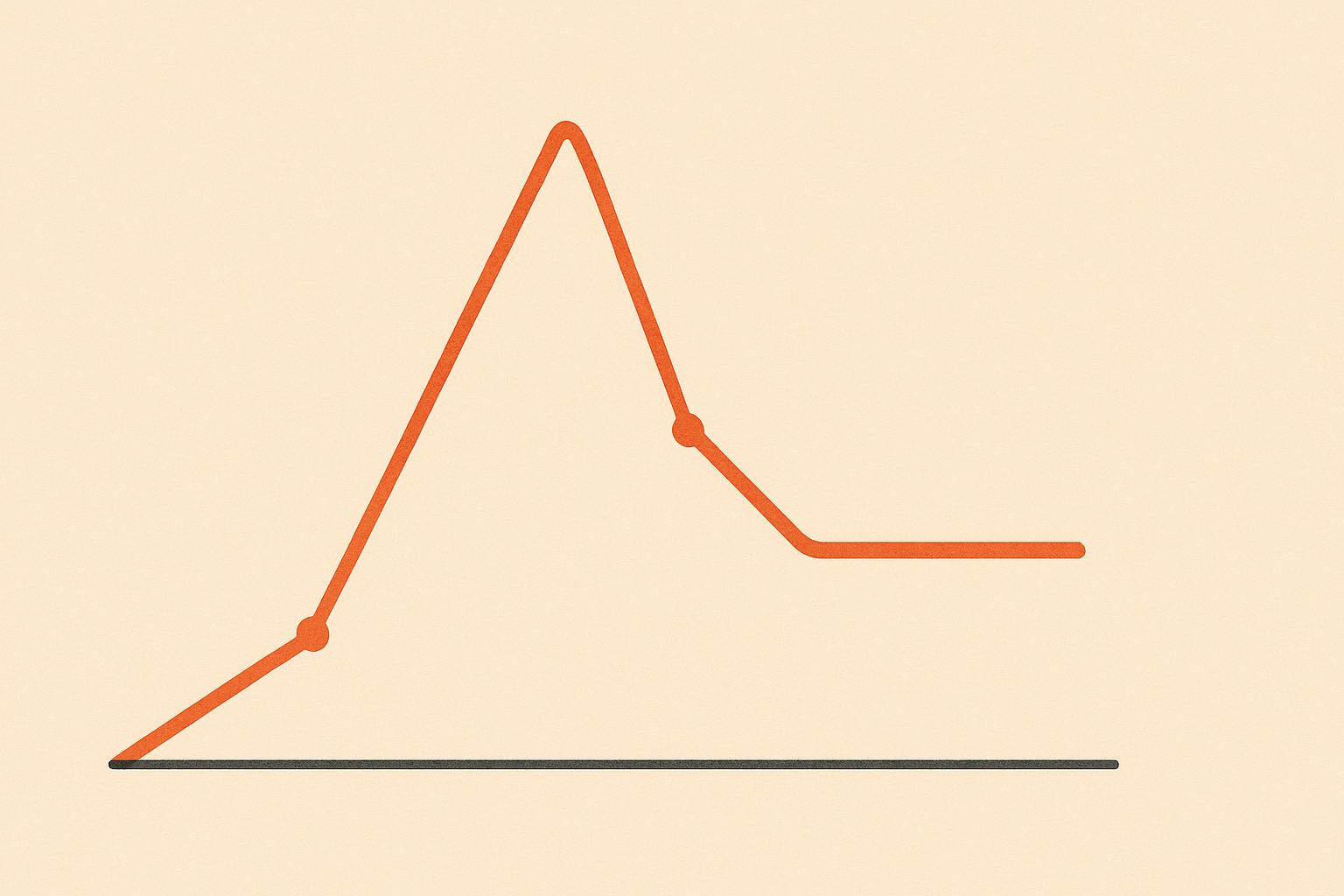
The problem is where that story stops. GetLatka, the source those figures trace to, also lists the next year: "In 2024, Clickfunnels's revenue reached $170M." So the same ledger that gives you the $265.3 million peak also records a drop of roughly a third the following year. The snippet just does not read that far.
This is the single most useful thing to notice about the ClickFunnels number, and almost nobody publishes it: the headline figure people cite as the company's size is a figure it has already come down from.
The revenue ledger, by year and by source type
Private companies do not file audited revenue, so every number below is either something the company said, something a tracker reported, or an outside estimate. Treating those as the same thing is how bad numbers spread. Here they are, typed:
Scroll to see more
| Year | Reported revenue | Type | Attributed to |
|---|---|---|---|
| 2016 | $14.4M | Reported |  GetLatka GetLatka |
| 2017 | $66M | Reported | GetLatka |
| 2019 | $100M+ (100,000+ customers) | Company-stated | ClickFunnels |
| 2020 | $120M | Reported | GetLatka |
| 2021 | $160M | Reported | GetLatka |
| 2022 | $205M | Reported | GetLatka |
| 2023 | $265.3M (150,000 customers) | Reported + company-stated | GetLatka / ClickFunnels |
| 2024 | ~$170M | Reported | GetLatka |
| Current run-rate estimates | $95.2M (ZoomInfo) to $107.7M (Growjo) | Estimate |  ZoomInfo / ZoomInfo /  Growjo Growjo |
Two honest caveats before you quote any of these. First, the trackers disagree by roughly 3x at the low end: ZoomInfo models ClickFunnels at $95.2 million while ElectroIQ repeats the $265.3 million peak, and both are labeled "revenue" with no as-of date attached. Second, the only figures ClickFunnels itself has stood behind are the round ones: "over $100 million in annual sales" by 2019, and "surpassed $265 million in annual revenue and 150,000 customers" by 2023, both from the company's own growth retrospective. Everything between and after is third party.
If you need one defensible sentence, it is this: ClickFunnels is a low-hundreds-of-millions revenue business that peaked around $265 million in 2023 and has reportedly come down from there. Anyone quoting a single precise current figure is guessing.
The bootstrap claim with a $100 million asterisk
ClickFunnels built an identity on being bootstrapped. Its own retrospective, updated as recently as August 2025, still describes a company with "no venture capital funding." That story is genuinely earned for the years that matter most: two founders, launched in October 2014, no institutional money, past $100 million in annual sales by 2019. That is real, and it is rare.
But the "no outside funding" framing it kept using into 2024 is contradicted by its own trackers. 
Two things are worth saying plainly. One, ClickFunnels never announced this round the way a venture-backed startup trumpets a raise, which is itself telling for a company whose brand is "we did it without investors." Two, there is a defensible semantic dodge available: VMG Partners is a growth-equity and consumer-focused firm, not a classic early-stage venture fund, so "no venture capital" and "took a nine-figure growth-equity check" can both be technically true from the company's chair. That nuance is fine. Continuing to market "no outside funding" after a reported $100 million check is where it stops being fine.
What actually made the money, and it was not the software
Here is the part operators most often copy wrong. People look at ClickFunnels and see a SaaS product with page-builder pricing. The revenue engine was never really the software. It was a media and education machine that happened to funnel into a software subscription.
Read the company's own list of what drove growth and the pattern is obvious:
- A webinar funnel built around a presentation Brunson says closed at a 30% rate, handing prospects funnel templates and a trial.
- Free-plus-shipping book funnels. Brunson gave away books (DotCom Secrets, Expert Secrets, Traffic Secrets) for the cost of shipping, using upsells to cover ad spend and using the reader as a warmed lead into the software.
- The One Funnel Away Challenge, a $100, 30-day program that put tens of thousands of people inside ClickFunnels to build their first funnel.
- Funnel Hacking Live, an annual conference that grew from 600 attendees in 2015 to nearly 5,000 by 2020.
- The Two Comma Club, an award for users who cleared $1 million through a funnel, which manufactured social proof and aspiration at scale.
None of that is a pricing tactic. It is a distribution flywheel. The software was the thing the flywheel sold, not the reason it spun. A bootstrapper who studies ClickFunnels for "how to price a page builder" is reading the wrong page. The lesson is that ClickFunnels spent years and real money building an audience it owned, and then had somewhere to send it.
The revenue engine was never the software. It was an audience-building machine that had somewhere to send the audience.
How much is Russell Brunson worth?
This is the most-searched follow-up question, and it deserves an honest non-answer. Russell Brunson's net worth is frequently estimated in the hundreds of millions, but there is no verified figure, and there cannot be one: his wealth is tied up in a private company whose own revenue the public cannot pin down within a 3x range, plus real estate, book and event income, and an equity stake diluted by the 2022 round. Any specific net-worth number you see for a private founder is a back-of-envelope guess dressed up as a fact. Treat it that way.
What a bootstrapper should actually take from the ClickFunnels number
Three things, and none of them is "build a page builder."
First, the peak is not the plateau. A $265 million high point that settles back toward $170 million is not failure, it is what maturity looks like for a product that rode a content wave. Build your own expectations around the settling number, not the spike.
Second, owning distribution is the moat. The reason ClickFunnels could bootstrap to nine figures is that it built demand it controlled before it needed to buy demand. Most founders try to buy their way to an audience and wonder why the unit economics never close.
Third, be honest with your own scoreboard. The most instructive thing about the ClickFunnels number is not the number, it is how loosely the company held the story around it: a peak reported as a plateau, a raise folded quietly under a bootstrapped banner. You do not owe the public your metrics. But the founders who last are the ones who do not start believing their own rounded-up version.
Keep reading
Sources
- ClickFunnels, "How ClickFunnels Grew Into a $100-Million Business" (company retrospective, updated August 25, 2025): https://www.clickfunnels.com/blog/how-clickfunnels-grew-into-a-million-dollar-business/
- GetLatka, "Clickfunnels Revenue 2024: $170M ARR, $101M Raised" (accessed July 2026): https://getlatka.com/companies/clickfunnels
- ElectroIQ, "ClickFunnels Statistics By Revenue And Facts" (updated April 29, 2026): https://electroiq.com/stats/clickfunnels-statistics/
- VMG Partners (firm site, for investor context): https://www.vmgpartners.com/
Written by
Joaquin del RioJoaquin del Rio covers the money behind the milestones for OperatorBook, digging into what bootstrapped and indie founders actually earn and what it took to get there.
Frequently asked questions
What is ClickFunnels' annual revenue in 2026?
ClickFunnels' revenue is reported at roughly $170 million for 2024, down from a reported peak of $265.3 million in 2023 (GetLatka). Current run-rate estimates diverge widely, from about $95 million (ZoomInfo) to $107 million (Growjo). ClickFunnels is privately held and does not publish audited figures, so there is no single confirmed current number.
Did ClickFunnels really grow with no outside funding?
For the years that matter most, yes: it bootstrapped past $100 million in annual sales by 2019 with no venture capital. But GetLatka reports ClickFunnels later raised about $101 million total, most recently a $100 million round led by VMG Partners in 2022. The company never publicly announced that round and kept marketing itself as having no outside funding into 2024.
Who owns ClickFunnels?
Founders Russell Brunson and Todd Dickerson, who launched the company in 2014, remain the majority controllers. Third-party ownership breakdowns describe VMG Partners taking a minority stake through the reported 2022 investment.
Why do ClickFunnels revenue estimates vary so much?
ClickFunnels is private and files no audited revenue, so every figure is either company-stated, tracker-reported, or an outside estimate. Independent trackers disagree by roughly 3x, from ZoomInfo's $95.2 million model to the $265.3 million peak still repeated across the web, and most figures carry no as-of date.
How much is Russell Brunson worth?
Russell Brunson's net worth is frequently estimated in the hundreds of millions, but there is no verified figure. His wealth is tied to a private company whose revenue cannot be pinned down within a 3x range, plus real estate, book and event income, and an equity stake diluted by the 2022 round. Any precise net-worth number for a private founder is a guess.
How did ClickFunnels make most of its money?
Through a media and education flywheel more than the software itself: free-plus-shipping book funnels (DotCom Secrets, Expert Secrets, Traffic Secrets), the $100 One Funnel Away Challenge, the Funnel Hacking Live conference, and the Two Comma Club award. That machine built an audience ClickFunnels owned and then sold the software subscription into.
More stories

Calendly Revenue: Why the Estimates Range From $70M to $349M (2026)
Calendly is private and stopped confirming its revenue, so third-party estimates now range from about $70M to $349M. Here is the source-typed ledger, the bootstrapped-then-$3B-raise story, and what actually transfers to operators.

The Month I Killed My Free Plan at $16K MRR
A bootstrapped founder removed a freemium tier at about $16,200 MRR in 2026. The honest 90-day ledger: signups halved, support fell ~38%, and MRR grew ~21%.

GNOME Foundation revenue was $2,892,213 in 2025, and 77% of it was one crypto donation
The headline is correct and nearly useless. $2,248,286 of the GNOME Foundation's record 2025 revenue arrived as cryptocurrency from a single donor, was sold at a $39,828 loss, and is 85% locked behind donor restrictions.