Bannerbear Revenue: How Jon Yongfook Compounded a Solo API the Slow Way (2026)
Bannerbear's first eight months earned about $400 a month. It took 16 months to reach $10K MRR and a patient year of technical tutorials to reach $27K. The real lesson of Bannerbear's revenue is the shape of the curve, not its size.
Updated on July 6, 2026
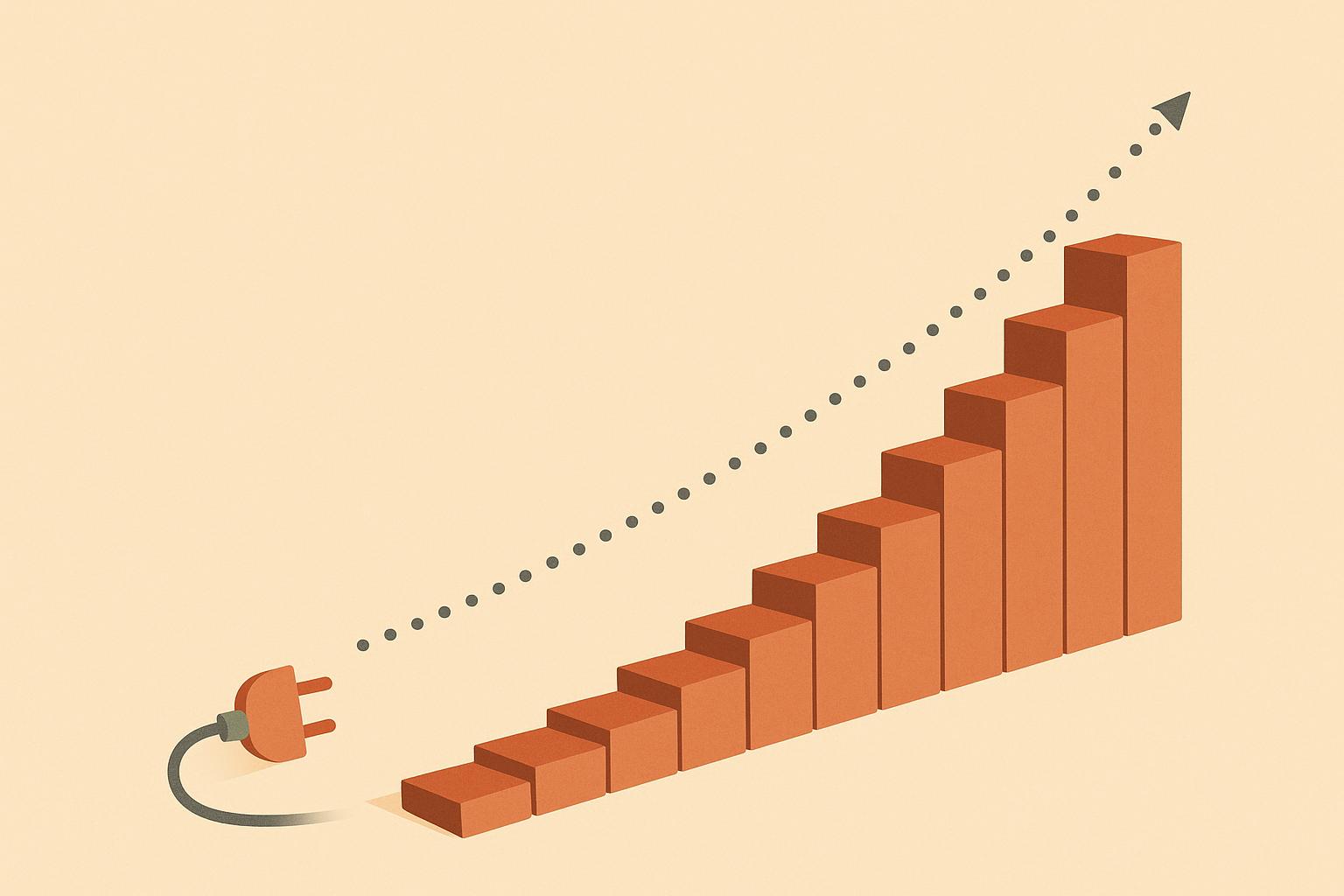
Flat editorial illustration of a small API plug growing into a long, steadily rising staircase of terracotta blocks on a sand background, showing patient compounding.
In this story
Quick answer
Bannerbear revenue, as of July 2026: Bannerbear is an image, video and PDF generation API that Jon Yongfook built and ran largely on his own. His own public milestones show it took roughly 16 months to reach about $10,000 in monthly recurring revenue (MRR) after he started in September 2019, then a further year to reach around $27,000 MRR by December 2021. Later third-party write-ups place the business near $1M in annual recurring revenue, with a reported peak around $53,000 MRR in 2024. Yongfook eventually stopped publishing a live revenue dashboard, so the most recent figures are reported rather than first-party. The interesting part is not the size of the number. It is how slowly, and how predictably, it was built.
The eight months that looked like nothing
Before Bannerbear there was a graveyard. In 2019 Yongfook ran a public "12 startups in 12 months" sprint and shipped seven of them between January and August. Direct revenue from that stretch: roughly zero. Most founders would file that year under failure.
Then in September 2019 he started what he first called Previewmojo, a small tool that generated Open Graph preview images automatically. For the first stretch it earned about $400 MRR and mostly sat there. In his own month-by-month breakdown the numbers barely move through late 2019 and into early 2020: $400, then $472 after a rebrand, then $488 around the time he shipped a proper API. Eight months of work for a flat line most people would have quit on.
He did not quit. He also did not pour gasoline on it. He picked one thing and kept showing up. The mantra he pinned to the work was the Ron Swanson line: "Never half-ass two things. Whole-ass one thing."
The pivot that mattered
The unlock was not a growth hack. It was a repositioning. Yongfook applied the Jobs to Be Done lens and stopped selling "an image tool," which nobody was searching for, and started selling two concrete jobs: automating marketing assets, and scaling them. Same product, sharper story.
The product itself is deliberately unsexy plumbing. Bannerbear is an abstraction layer over Puppeteer and FFmpeg that turns a template plus some data into a finished image, video or PDF through a REST call. It plugs into Airtable, Zapier, Make and WordPress, so both developers and no-code operators can wire it into a pipeline and forget about it. That "wire it in and forget it" quality turns out to be the whole business model.
By the end of 2020 the flat line had bent. May through October 2020 sat around $6,109 MRR, and the November 2020 to January 2021 window crossed $10,455. Sixteen months, start to $10K.
How the revenue actually compounded
The post where Yongfook documented that first $10K hit the front page of Hacker News in January 2021. Then he did the least glamorous thing possible: he wrote tutorials. Over the following year the revenue went from $10K MRR to about $20K by July 2021 and roughly $27K MRR by December 2021, and the engine underneath was almost entirely evergreen technical content.
Not thought-leadership content. Load-bearing engineering content. Pieces like "8 Tips for Faster Puppeteer Screenshots" and an FFmpeg overlay guide pulled in exactly the developers who had the problem Bannerbear solved. He described the moat plainly: "It's basically impossible to delegate or outsource creating this type of content." He also shipped five free generator tools, one of which still ranks on page one for its search term, and defined his whole job as "any kind of activity aligned to growth, that does not involve building features."
He tried the flashy things too. He paid a Silicon Valley actor a couple of thousand dollars on Cameo for an endorsement video. That is the bit people remember. It is not the bit that compounded. The tutorials and the free tools were still working two years later. The Cameo clip was a moment.
The part most write-ups get wrong
Search "Bannerbear revenue" and you get two flavors of story: the 2021 "journey to $10K MRR" posts, and the 2025 "one-man API prints $1M ARR" hype. Both skip the actual operator lesson, which is about the shape of the curve, not its height.
First, an API is a retention machine. When a customer embeds Bannerbear into a production workflow, the switching cost is not a subscription toggle, it is an engineering project. That is why a boring API can grow slowly and still hold: churn fights you far less than it does in a consumer app. It is the opposite trade from a fast AI wrapper like when Tony Dinh shipped TypingMind in the first days of the ChatGPT API. Speed there, durability here.
Second, the growth channel was not copyable. Anyone can run a Cameo promo. Almost nobody will write the fortieth Puppeteer tutorial, keep it accurate for years, and let it rank. That patience is the same edge behind the boring testimonial widget that outearned an AI product: unglamorous work, compounded, beats a spike.
Third, the honest footnote. Yongfook built in public for years and then, around the reported 2024 peak near $53K MRR, pulled his live revenue dashboard. That is why the recent "$1M ARR" figures are third-party estimates rather than his own charts. Building in public is a growth channel with a shelf life. It buys attention early and becomes a liability once the numbers are large enough to attract copycats and noise. Knowing when to stop sharing is its own operator skill.
What an operator can actually copy
Give it 12 to 18 months before you judge a bootstrapped product. Yongfook's first eight months looked like a failed experiment.
Sell the job, not the tool. The repositioning around "automate" and "scale" moved more than any feature.
If you can build an API or an integration people embed, do it. Embedded products churn slowly.
Make your marketing something a competitor cannot outsource. For a developer tool, that is usually deep, correct technical content.
Launches and Product Hunt spikes are fine, but treat them as moments. Build the thing that is still working in year three.
None of this is fast. That is the point. Bannerbear's revenue is a story about a founder who found one unglamorous problem, wired himself into other people's workflows, and then wrote patiently enough that Google did the selling for years. The slow curve was not a weakness in the plan. It was the plan.
Revenue figures through December 2021 are from Yongfook's own published dashboards and posts. Later figures (a reported peak near $53K MRR in 2024 and roughly $1M ARR) are third-party estimates, published after he stopped sharing a live revenue dashboard, and should be read as approximate.
Bannerbear is a REST API that generates images, videos and PDFs from templates plus data. It is an abstraction layer over Puppeteer and FFmpeg, and it plugs into tools like Airtable, Zapier, Make and WordPress so developers and no-code users can automate marketing assets at scale.
How much revenue does Bannerbear make?
Jon Yongfook's own published figures show about $10,000 MRR by January 2021 and roughly $27,000 MRR by December 2021. Later third-party write-ups estimate the business near $1M ARR with a reported peak around $53,000 MRR in 2024, but those recent numbers are estimates because Yongfook stopped publishing a live revenue dashboard.
How long did it take Bannerbear to reach $10K MRR?
About 16 months. Yongfook started the product (first as Previewmojo) in September 2019 and crossed roughly $10,455 MRR in the November 2020 to January 2021 window. Notably, the first eight months were nearly flat at about $400 MRR.
Is Bannerbear bootstrapped?
Yes. Yongfook built and ran Bannerbear largely on his own as a self-funded product, without raising outside investment, after a 2019 run of seven other startups that earned close to nothing.
How did Bannerbear grow?
Mostly through evergreen technical content and free tools. Deep engineering tutorials such as a Puppeteer speed guide ranked for the exact developers who had the problem, five free generator tools pulled in search traffic, and a repositioning around the jobs of automating and scaling marketing sharpened the pitch. The $10K MRR write-up also hit the Hacker News front page in January 2021.
Who is Jon Yongfook?
Jon Yongfook is an indie founder who ran a public '12 startups in 12 months' challenge in 2019, then built Bannerbear into a compounding API business run largely solo. He is known in the build-in-public community for documenting his revenue journey in detail.
TypingMind launched five days after OpenAI opened the ChatGPT API and crossed $500,000 in revenue within a year. Here is what solo operators can copy from Tony Dinh's build-in-public playbook.
Testimonial.to revenue hit $800K ARR bootstrapped by one founder, out-earning his AI product PDF.ai four to one. Damon Chen's real numbers, and the lesson for 2026.
A composite founder diary at 82K MRR. When a payment order names one person and numbers another, the receiving bank may pay on the number and need not check the name. The escape the statute gives a non bank originator is deleted by a signature, and the right to chase the stranger follows the loss.